What We Are
About Us
Equity based democratic, poverty free, enhances the productivity of agriculture, sustainable society, which respect to human rights, mainstreams gender equality, and ensures social justice through good governance and sustainable development.
Background of Manab Unnayan Kendra (MUK)
It was 1995; the Government of Bangladesh and a lot of giant and small-scale NGOs were launching various types of development projects in the country to combat all forms of poverty from human lives as well as the country by using million dollars and other resources. Remarkable positive changes were visible especially in the field of education, health, agriculture, communication and transportation, trade and commerce, and per-capita income raised beyond expectation. The number of Millionaires increased dreadfully and life expenditure started increasing also, leading many politicians, think tankers, and business magnets to feel proud of this advancement. Within these golden moments, some rural, educated, young men evaluated this situation very critically and found that the blessings of the country’s advancement failed to touch the lives of the majority of the rural poor, ethnic minorities, indigenous people, tobacco workers, and women, where human rights violations were a routine part of the existing power structure. Due to partial and unbalanced development mechanisms, the poor became poorer and exploitation appeared vigorously in our economy. To combat this injustice, exploitation, and inhumanity and to establish a model democratic poverty-free society, on July 01, 1995, those young people of Hijuli village under the leadership of Asaduzzaman Selim formed a non-profit, Non-Government organization named MUK, honoring the Bill of Human Rights. Dedicated to serving neglected children, women, youth, ethnic/indigenous people, tobacco workers, the Dalit community, victims of human trafficking, and socially vulnerable people, MUK obtained its legal registration from the Department of Social Welfare, Meherpur on 27.08.1997 and MUK obtained registration from the NGO Affairs Bureau (NGOAB) under the Prime Minister’s Office on 25.11.2004 (Registration No: 1985), which has been successfully renewed until 24.11.2029.
Executive Summary
Core Thematic Are of MUK
- Sensitizing local justice delivery system towards the needs of women.
- Ensuring the rights of the Dalit/ Untouched community, rehabilitating them, establishing their participation in the mainstream of society and building leadership among them.
- Ensuing transparency, accountability of the service delivery institutions and social safety net.
- Bringing all children form grassroots level causes formal education system.
- Enhance opportunities forfarmers (both man and women), predominantly small and marginal into income generating activities through enhancing the productivity of agriculture (crops, livestock and fisheries).
- To eliminate teasing or sexual harassment from society.
- Sustainability in all steps of development initiatives.
- Mass people centered development initiative.
- Poverty alleviation by local management, local resources and local ideas/indigenous knowledge.
- People can explore the way of develop make success any project as a group/team.
- Ensure desired & better life for transgender community and Sex worker by rehabilitation, by education, by medical Support, by providing their basic needs as a human.
- Child and Women’s Rights Establishment and Advocacy Program.
- Advocacy for ensuring access of marginalized and underprivileged communities to government services.
- Formulating and implementing development plans to build a climate-resilient Bangladesh.
Legal Status of the Organization
Working Area
| 1. | Meherpur | Sadar | 05 | 65 |
| Gangni | 06 | 52 | ||
| Mujibnagar | 04 | 38 | ||
| 2. | Chuadanga | Sadar | 09 | 27 |
| Alamdanga | 05 | 28 | ||
| 3. | Kushtia | Daulatpur | 08 | 23 |
| Mirpur | 04 | 25 | ||
| 4. | Jhenaidah | Sadar | 06 | 42 |
| Kaligong | 07 | 49 | ||
| 5. | Magura | Magura Sadar | 05 | 32 |
| Mohammadpur | 04 | 28 | ||
| 6. | Satkhira | Dehata | 09 | 23 |
| Shyamnagar | 07 | 21 | ||
| 7. | Narail | Narail Sadar | 03 | 18 |
| Lohagara | 05 | 13 | ||
| 8. | Bagerhat | Fakirhat | 05 | 21 |
| Mollarhat | 05 | 18 | ||
| Sorankhola | 06 | 16 | ||
| 9. | Shirajgonj | Tarash | 09 | 87 |
| 10. | Dhaka | South City Corporation | Ward: 22 & 55 | 17 |
| Total | 10 | 20 | 114 | 643 |
Geographical Location of the Activities
| 1. | Meherpur | Sadar | 05 | 65 |
| Gangni | 06 | 52 | ||
| Mujibnagar | 04 | 38 | ||
| 2. | Chuadanga | Sadar | 09 | 27 |
| Alamdanga | 05 | 28 | ||
| 3. | Kushtia | Daulatpur | 08 | 23 |
| Mirpur | 04 | 25 | ||
| 4. | Jhenaidah | Sadar | 06 | 42 |
| Kaligong | 07 | 49 | ||
| 5. | Magura | Magura Sadar | 05 | 32 |
| Mohammadpur | 04 | 28 | ||
| 6. | Satkhira | Dehata | 09 | 23 |
| Shyamnagar | 07 | 21 | ||
| 7. | Narail | Narail Sadar | 03 | 18 |
| Lohagara | 05 | 13 | ||
| 8. | Bagerhat | Fakirhat | 05 | 21 |
| Mollarhat | 05 | 18 | ||
| Sorankhola | 06 | 16 | ||
| 9. | Shirajgonj | Tarash | 09 | 87 |
| 10. | Dhaka | South City Corporation | Ward: 22 & 55 | 17 |
| Total | 10 | 20 | 114 | 643 |
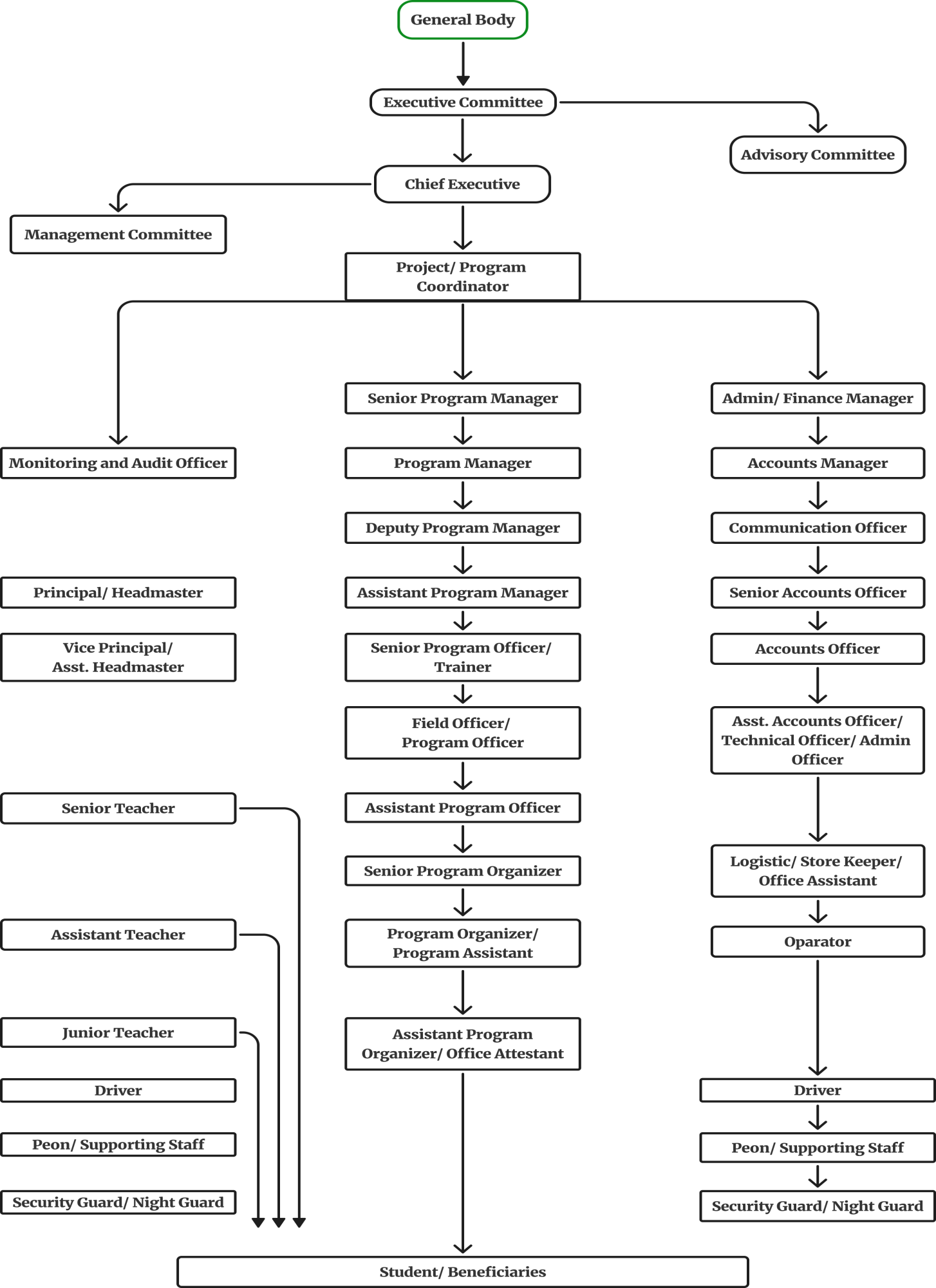
Organogram
Development Partners
Women Affairs Bureau
IDCOL
BNF
CAMPE
DFID
Relief International
ALRD